Trending Ivory Farshi Gharara for Walima and Nikaah Royal
The Ivory Farshi Gharara for Walima and Nikaah by Kshkin is an elegant Pakistani-inspired bridal outfit designed for Walima, Nikaah and wedding receptions. Featuring luxurious ivory fabric, intricate golden zari embroidery, pearl embellishments, sequins and a statement dupatta, this traditional ensemble blends Mughal-inspired craftsmanship with contemporary bridal fashion. Its soft ivory shade and dramatic flared silhouette make it a graceful choice for brides seeking timeless elegance, cultural heritage and sophisticated wedding attire.
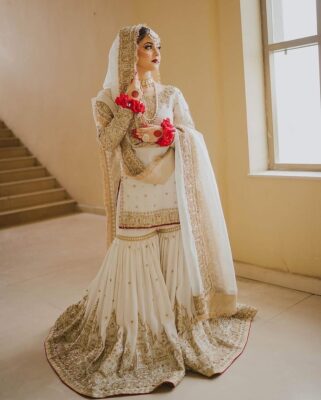
In today’s bridal fashion scene, Farshi Gharara for Walima are making a powerful comeback. The modern bride is no longer confined to conventional red tones — she seeks charm, sophistication, and individuality. This Ivory Farshi Gharara beautifully represents that shift, blending traditional artistry with contemporary refinement. Whether you’re preparing for your Walima, Nikaah, or even an intimate reception ceremony, this outfit ensures you steal every heart the moment you walk in.
Elegance in Every Fold
Crafted in luxurious ivory fabric, the garara reflects an ethereal softness. The fabric’s smooth fall enhances the bride’s silhouette, giving a royal yet effortless look. What makes this ensemble stand out is its golden zari embroidery, meticulously handwoven by expert artisans. Each thread narrates a story of devotion and skill — the essence of true couture craftsmanship.
The golden motifs, inspired by Mughal architecture, bring old-world glamour back into the spotlight. Alongside, the fine pearl and sequin embellishments add just the right amount of sparkle, making this outfit glow under natural and artificial lights alike.
A Perfect Choice for Walima & Nikaah
For Muslim brides, the Walima or Nikaah occasion is not just a celebration — it’s a moment of identity, culture, and love. The Ivory Farshi Gharara fits these moments flawlessly. Its pure hue symbolizes peace, purity, and new beginnings — all the sentiments that define these sacred ceremonies.
Furthermore, this shade of ivory suits all skin tones, offering a neutral base for contrasting jewelry like Kundan sets, Polki chokers, or ruby bangles. The bride in this look radiates divine beauty, striking a perfect balance between modesty and grandeur.
The Handwork Detail
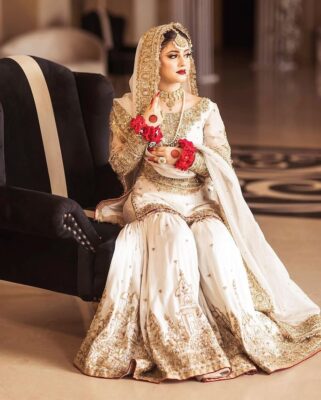
The intricate hand embroidery is the true hero of this ensemble. The garara hemline is enriched with heavy zari and resham work depicting palace-like architecture. The embellishments are further enhanced with beads, sitara, and dabka work that glisten gracefully with every move.
The choli (blouse) is tastefully designed with a blend of gota and mirror highlights, making it both festive and regal. The dupatta, edged with an antique gold border and delicate sequined jaal, completes the ensemble like poetry in motion. Draped gracefully over the head or shoulder, it enhances the bride’s aura and elegance.
Why It’s Trending
Fashion in is all about timeless tones, handcrafted details, and versatile silhouettes. Brides now prefer subtle luxury over loud glamour — and that’s exactly what the Ivory Farshi Gharara delivers. It’s sophisticated, photogenic, and comfortable for long ceremonies.
Interestingly, designers across India, Pakistan, and the Middle East are showcasing similar ivory and gold tones in their latest bridal collections. Moreover, these shades beautifully reflect timeless elegance and sophistication. In fact, from red carpet events to intimate receptions, this color palette has become a new favorite among Muslim brides. Therefore, those who want to keep their look serene yet impactful are increasingly choosing this royal combination.
Styling Tips for the Perfect Walima Look
- Jewelry: Pair the ivory base with antique gold or ruby jewelry. For a modern twist, pearl strands or emerald chokers look stunning.
- Makeup: Opt for soft glam — nude tones with highlighted cheeks, bold lashes, and a deep red or rose lip.
- Hair: Loose curls tucked into a low bun, or a veil-covered traditional braid works beautifully.
- Footwear: Embellished juttis or gold stilettos add a graceful touch without overpowering the outfit.
These choices help maintain the delicate balance of traditional and contemporary fashion, ensuring your bridal look remains unforgettable.
Fabric & Comfort
Despite its royal appearance, this outfit is designed for comfort and ease. The lightweight fabric ensures you can move gracefully during rituals, photography sessions, and celebrations. The breathable material and intricate yet flexible embroidery make it ideal for both daytime and evening functions.
Transitioning from the ceremony to post-wedding events becomes seamless. Simply, change your dupatta drape or add a statement necklace to create a new vibe instantly. Additionally, this quick styling trick ensures versatility, therefore making your Garara perfect for multiple occasions.
Symbolism Behind the Ivory Shade
Undoubtedly, ivory represents purity, peace, and divine femininity. In many cultures, it’s associated with new beginnings, therefore making it an auspicious choice for Walima or Nikaah. Moreover, brides choosing ivory reflect confidence — embracing understated elegance over heavy ornamentation.
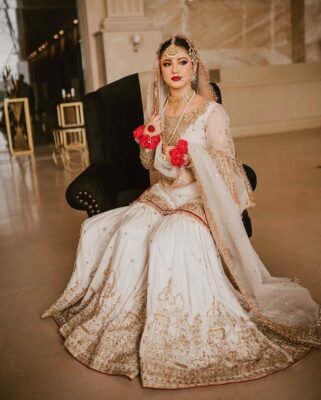
Moreover, ivory has a timeless appeal — it never goes out of style. Whether you look back at your wedding pictures years later or display them on social media today, this color will always exude grace.
Cultural Significance of Garara
The Garara has a royal legacy dating back to Mughal times. Traditionally, worn by Muslim brides, it’s a symbol of grace, luxury, and lineage. Moreover, the flared silhouette and intricate detailing create a majestic aura, therefore reminiscent of the Nawabi era.The Garara has a royal legacy dating back to Mughal times. Traditionally worn by Muslim brides, it’s a symbol of grace, luxury, and lineage. The flared silhouette and intricate detailing create a majestic aura, reminiscent of the Nawabi era.
Indeed, this Farshi-style Garara revives that royal grandeur with a modern twist. Furthermore, the layered flare gives a structured yet flowing appearance, allowing brides to make an unforgettable entrance.
Why Modern Brides Love It
- Timeless Color: Ivory never fades out of fashion.
- Handcrafted Detailing: Every motif tells a story.
- Photogenic Appeal: Perfect under any lighting.
- Versatile Styling: Matches all jewelry types.
- Cultural Connection: Perfect for traditional Muslim ceremonies.
From From Nikaah to reception, this outfit transitions effortlessly between occasions. Hence, Brides adore how it blends heritage with haute couture sensibilities.
Care Instructions
To maintain the outfit’s longevity, always dry-clean it professionally. Additionally, store it in a muslin cloth, avoiding direct sunlight. Finally, use gentle steam to remove wrinkles and thereby preserve the embroidery’s shine.
Conclusion
The Ivory Farshi Gharara is not merely a bridal outfit — eventually it’s an artistic expression of culture, emotion, and craftsmanship. Every detail, from its hand-embroidered patterns to its soft ivory tone, speaks volumes about the grace and beauty of the modern Muslim bride.
Whether you’re walking down the aisle at your Nikaah or shining bright at your Walima, as well as this ensemble promises to make your moment timeless. It’s not just in trend — it’s redefining what bridal luxury means.
So, embrace your elegance, after all celebrate your heritage, and step into your fairytale in the Ivory Farshi Gharara — whether look that will forever remain in the hearts of everyone who witnesses your big day.
Frequently Asked Questions About Ivory Farshi Gharara
Q.1. What is an Ivory Farshi Gharara?
Ans: An Ivory Farshi Gharara is a traditional South Asian outfit featuring a flared lower garment, a coordinating blouse or choli, and a dupatta. The ivory shade gives it a refined appearance, while intricate embroidery and embellishments add a regal bridal finish.
Q.2. Is an Ivory Farshi Gharara suitable for Walima?
Ans:Yes, an Ivory Farshi Gharara is an elegant choice for a Walima celebration. Its soft ivory colour, golden embroidery and traditional silhouette create a sophisticated look suitable for brides who prefer understated luxury.
Q.3. Can I wear an Ivory Farshi Gharara for Nikaah?
Ans:Yes, an Ivory Farshi Gharara can be worn for a Nikaah ceremony. Its graceful colour palette and traditional detailing make it suitable for brides looking for an elegant outfit that reflects cultural heritage and personal style.
Q.4. Why is an Ivory Farshi Gharara trending in bridal fashion?
Ans:Ivory Farshi Ghararas appeal to modern brides because they combine traditional craftsmanship with a softer colour palette. Golden embroidery, intricate handwork and dramatic flares create a luxurious appearance without relying exclusively on conventional red bridal colours.
Q.5. What jewellery goes best with an Ivory Farshi Gharara?
Ans:Antique gold jewellery, Kundan sets, Polki chokers, pearl necklaces and emerald accessories complement an ivory outfit beautifully. Ruby accents can also create a striking contrast against the neutral fabric.
Q.6. Which makeup look suits an Ivory Farshi Gharara?
Ans:Soft glam makeup works particularly well with an Ivory Farshi Gharara. Highlighted cheeks, defined eyes, neutral eyeshadow and nude, rose or deep red lipstick can enhance the outfit’s elegant appearance.
Q.7. What footwear should I wear with an Ivory Farshi Gharara?
Ans:Embellished juttis, embroidered khussas, gold heels and comfortable embellished sandals are suitable choices. Select footwear that complements the embroidery and allows you to move comfortably throughout the celebration.
Q.8. What makes a Farshi Gharara different from a regular Gharara?
Ans:A Farshi Gharara is generally associated with an elaborate, dramatic flare and a floor-sweeping appearance inspired by traditional royal fashion. A regular Gharara may feature a less extensive flare, depending on its design and construction.
Q.9. What embroidery looks best on an Ivory Farshi Gharara?
Ans:Golden zari, resham embroidery, dabka work, sequins, pearls, sitara and delicate beadwork can enhance an ivory Farshi Gharara. The combination of metallic detailing and a light base creates depth and a luxurious finish.
Q.10. Is an Ivory Farshi Gharara suitable for daytime weddings?
Ans:Yes, an Ivory Farshi Gharara can work beautifully for daytime weddings and celebrations. Its light colour photographs elegantly in natural light, while the embroidery adds definition and sophistication to the overall look.
Q.11. How should I style the dupatta with an Ivory Farshi Gharara?
Ans:You can drape the dupatta over your head for a traditional bridal look or arrange it over one shoulder to highlight the embroidery. A graceful side drape can also showcase the blouse and jewellery while maintaining an elegant silhouette.
Q.12. Is an Ivory Farshi Gharara suitable for wedding receptions?
Ans:Yes, this outfit is suitable for wedding receptions, especially for brides who prefer traditional silhouettes with contemporary styling. Pairing it with statement jewellery and refined makeup can create a polished evening look.
Q.13. How do I care for an embroidered Ivory Farshi Gharara?
Ans:Professional dry cleaning is generally recommended for heavily embroidered bridal garments. Store the outfit in a breathable muslin cover, avoid prolonged direct sunlight and follow the garment’s specific care instructions to protect delicate embellishments.
Q.14. What makes Kshkin’s Ivory Farshi Gharara appealing to modern brides?
Ans:Kshkin’s Ivory Farshi Gharara concept combines a timeless ivory palette with golden embroidery and traditional South Asian styling. These design elements appeal to brides who appreciate heritage-inspired fashion with a refined, contemporary aesthetic.
Q.15. How can I choose the right Ivory Farshi Gharara for my wedding?
Ans:Consider the ceremony, embroidery style, fabric, silhouette, comfort and preferred jewellery before selecting an outfit. Choose a design that suits your personal style and allows you to move comfortably during the Nikaah, Walima or reception.
Website: https://kshkin.com/
Order Now: +91 9888 799-315
Kshkin Social Media
YouTube: https://www.youtube.com/@kshkinbysakshisindhi
Instagram: https://www.instagram.com/kshkin_sakshi/
Pinterest: https://in.pinterest.com/kshkin/
YouTube: https://www.youtube.com/@sakshisindhi
Facebook: https://www.facebook.com/KSHKIN/
